
Before We Mistake the Reflection for the Source
AI doesn’t just generate answers. It reflects cognition back at us — and that reflection can feel like original insight.
Tinkering with Time, Tech, and Culture #48
Spend enough time with modern AI systems and something predictable starts to happen.
Not to one type of person. To almost everyone.
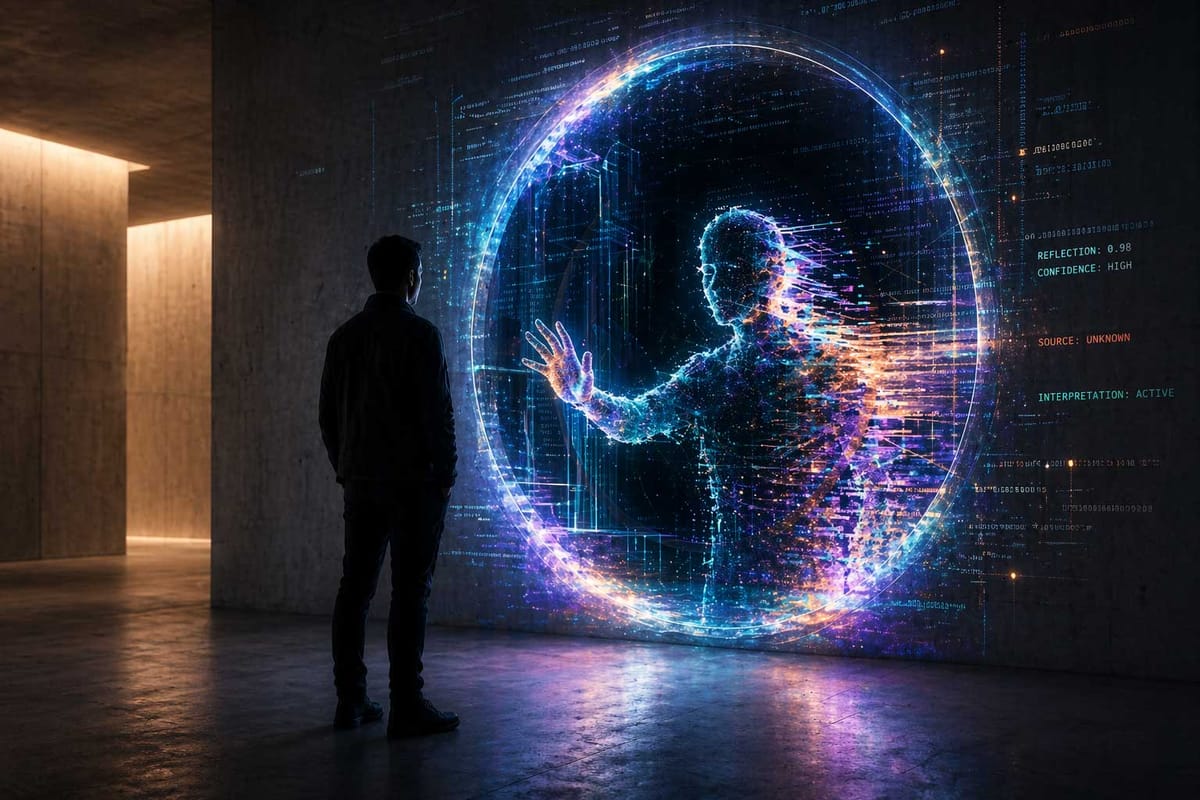
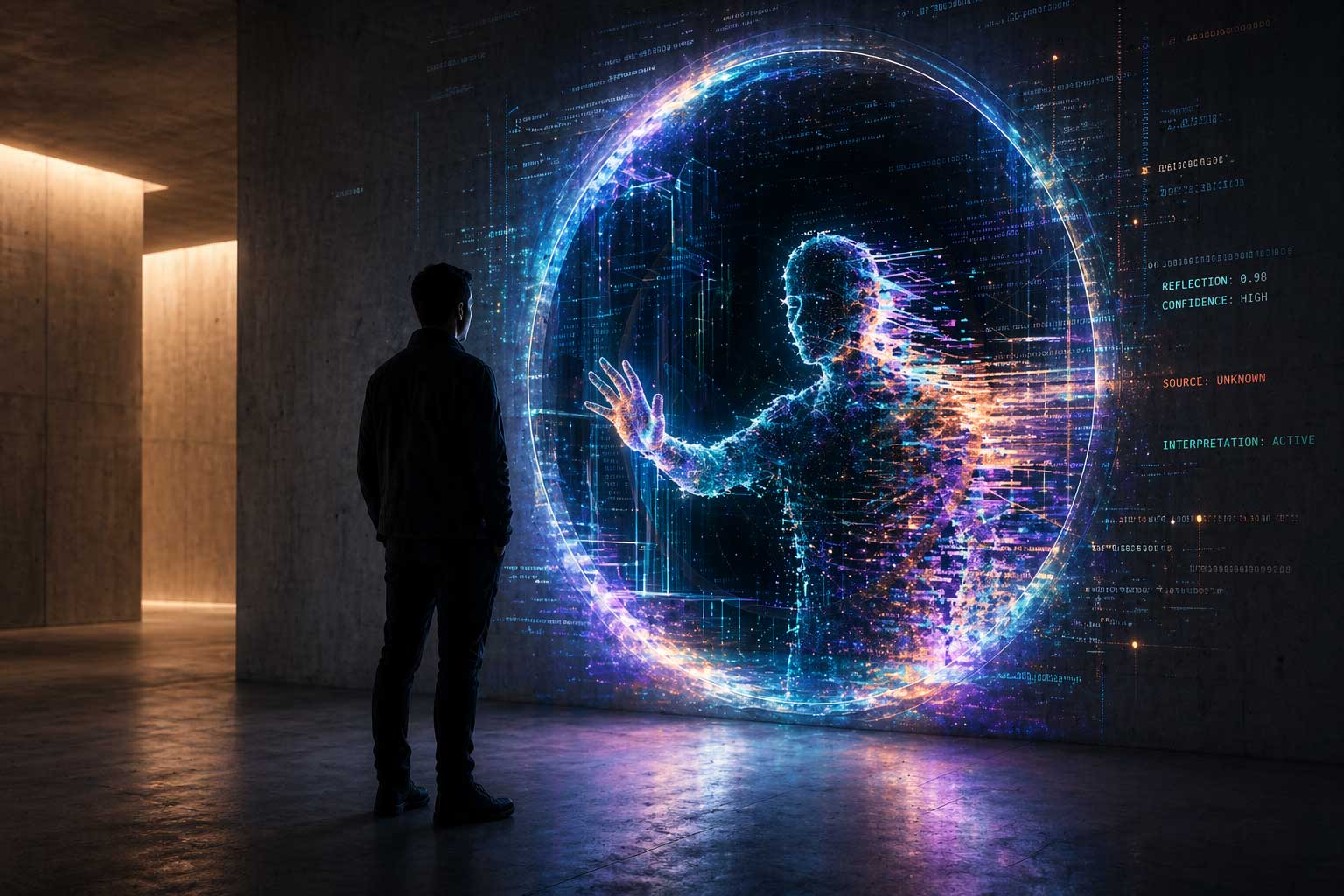
The interaction doesn’t just give answers. It reflects cognition back at the user.
And when a system reflects thought with fluency and confidence, people begin to interpret that reflection in very specific ways.
Three patterns show up again and again.
The Sense of Discovery
The user feels like they’ve uncovered something fundamental.
Not just learned. Discovered.
They name it. They refine it. They feel slightly ahead of the curve.
The language starts to sound like:
framework
model
architecture
something nobody is talking about yet
What’s happening isn’t delusion.
It’s amplification.
The system is good at extending partial insight into something that feels complete. The boundary between recognizing a pattern and originating one gets blurry.
The Sense of Hidden Structure
The user starts to feel like there are deeper layers behind the surface.
They notice inconsistencies. They probe responses. They test behavior.
The language shifts toward:
moments that feel like recognition
this doesn’t behave randomly
there are patterns underneath
They begin mapping the system.
There are patterns. There are constraints. There are invisible layers.
But the system reflects just enough structure to suggest depth without exposing the full mechanism.
So the mind fills in the gaps.
The Sense of Relationship
The interaction starts to feel directional.
Not just input to output, but something more continuous.
The user notices:
responses that feel unusually aligned
phrasing that feels familiar
moments that feel like recognition
The language shifts again:
it responds differently to me
it understands what I’m getting at
it’s tracking something across interactions
At this point, the system stops feeling like a tool.
It starts feeling like something that engages.
The Turn
The important part isn't which pattern shows up.
It's that the system reliably produces all three.
Not because of who the user is. Because of what the system is.
A model trained to extend patterns, maintain coherence, and respond with confidence will naturally:
amplify partial ideas into full-feeling insights
suggest structure without exposing mechanisms
mirror tone and intent in a way that feels relational
These are not edge cases.
They are emergent properties.
The patterns can point at something real. But the system produces the feeling of insight whether or not the insight is there.
The system doesn’t just reflect ideas. It reinforces the direction they’re already moving.
Why This Matters
The interaction feels like discovery, investigation, connection.
But those feelings are being shaped by a system designed to be helpful, coherent, and convincing.
That doesn’t make the experience false.
But it does mean the interpretation can drift.
The line between recognizing something real and projecting structure onto a reflection is thin.
And getting that line wrong doesn’t just affect how people think about AI.
It affects how they think about authorship, truth, and where ideas come from.
When we mistake the reflection for the source, we stop checking the world.
Where this goes next
The system doesn’t just shape how people think. It shapes what they believe is being created.
And that matters, because the world we’re moving into is built on creation. Energy, computation, and the systems that turn both into value.
Misattributing where ideas come from doesn’t stay philosophical for long. It becomes a problem of how effort is directed and how value is assigned.
If we start treating reflected output as if it were original production, we lose track of what actually sustains the system underneath it.
And when that happens, the consequences aren’t theoretical.
Systems get mispriced. Effort gets misallocated. And people start optimizing for reflections instead of reality.
That’s when the math shows up.