
The Cost Was Paid Before You Arrived
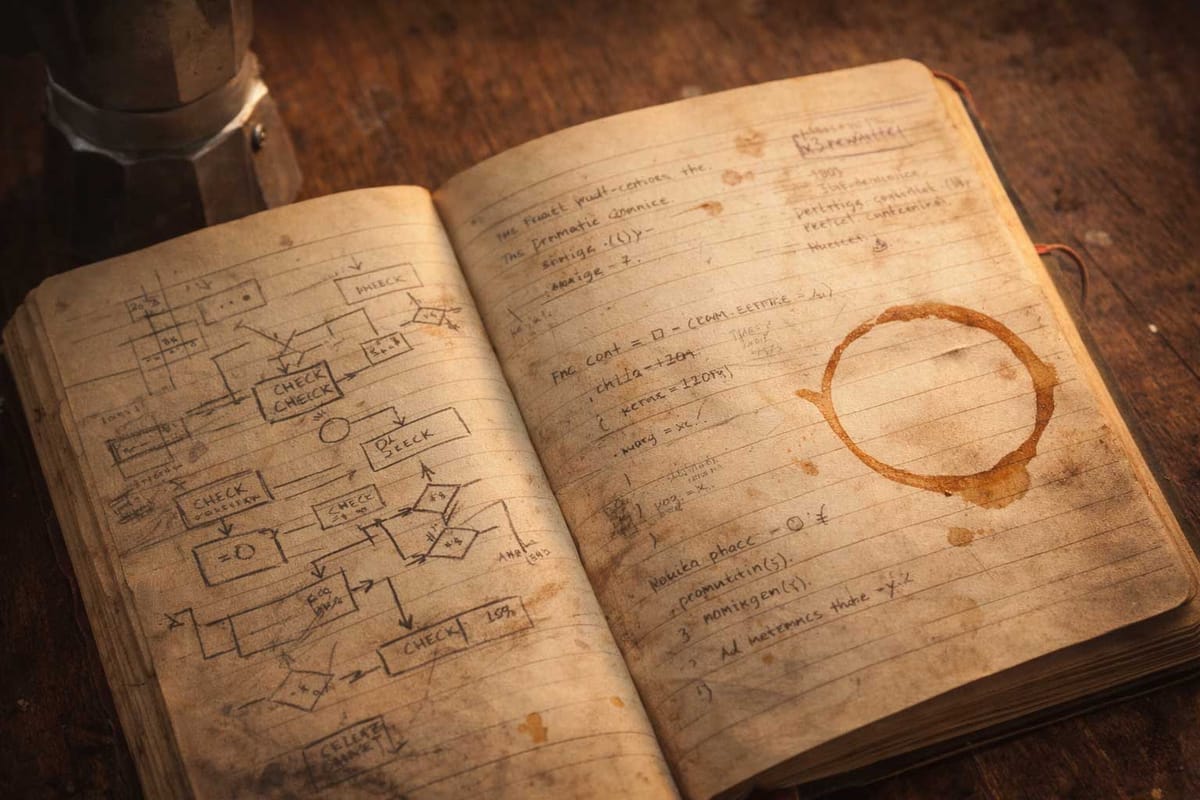
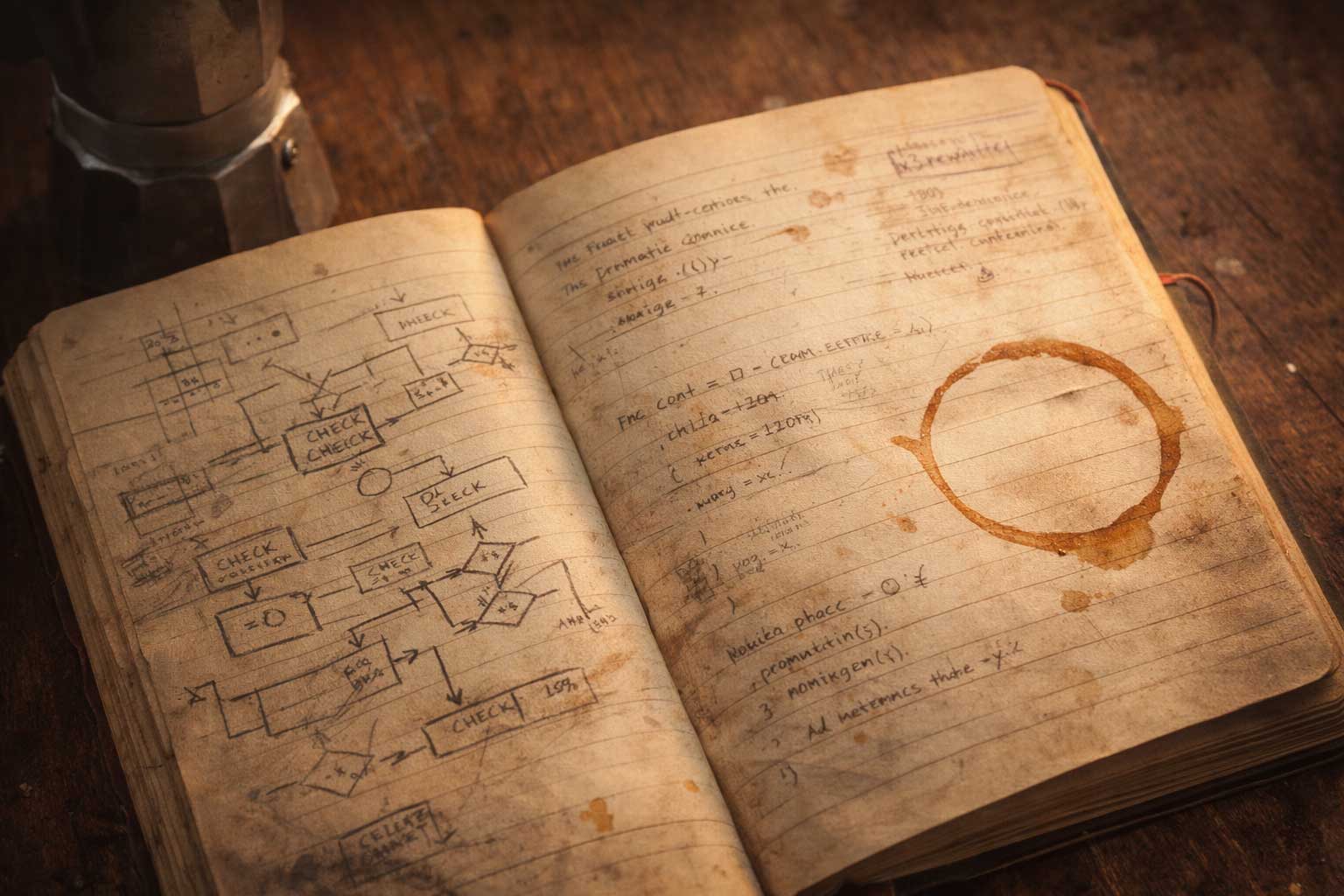
Every durable system carries sediment. The false starts, the rewrites, the arguments — compressed out of sight. When someone new arrives, they see the artifact. What they can't see is what it cost.
Tinkering with Time, Tech, and Culture #40
I wrote recently about what gets remembered when systems succeed.
There’s a second problem: when we remember only the final pattern, we forget the cost of discovering it.
Understanding gets replaced by certainty.
That’s how signal thins out.
There’s another thing that disappears when systems succeed.
The struggle that made them possible.
By the time a system is stable enough to depend on, most of the false starts are gone. The ugly versions are deleted. The mailing list arguments are buried. The dead branches are pruned. The commits that hurt the most are flattened into a clean history.
What remains is the artifact.
What disappears is the cost.
And then someone new arrives.
They see the artifact in its finished state. They see the pattern. They see the structure. Sometimes they even see the elegance. And with fresh eyes and modern vocabulary, they explain what the system “should have done.”
Sometimes they are right.
But what they don’t see, what no one can see unless it’s preserved, is the decade of wrong answers that made the final shape possible.
The cost was paid before they arrived.
Invisible Work
Every durable system carries sediment.
The edge cases that almost broke it.
The rewrites that failed.
The abstractions that looked clean and turned out dishonest.
The optimizations that worked in theory and collapsed under pressure.
By the time the system looks obvious, it isn’t obvious anymore. It’s compressed experience.
The compression is what makes it legible.
It’s also what makes it dangerous.
Because compression hides effort.
And when effort is hidden, certainty becomes cheap.
Certainty Without Lineage
There’s a particular kind of confidence that shows up late in a field.
It’s fluent.
It’s well-formatted.
It references the right concepts.
It feels like insight.
But if you look closely, it has no visible lineage.
No record of having been wrong.
No trail of revisions.
No public evidence of friction with reality.
That kind of certainty isn’t malicious.
It’s borrowed.
It borrows from the invisible labor that shaped the field before it arrived.
Borrowed certainty isn’t the same as earned understanding.
And over time, the difference matters.
I Am Not Exempt
I’ve pulled my own early code out of boxes and wondered what I was thinking.
I’ve reread essays I once defended and winced at the certainty.
I’ve built things I was sure were correct, only to watch them fail under real conditions.
That record, the visible mistakes, the revisions, the abandoned paths, is not embarrassing.
It’s proof of work.
It’s how you know the eventual clarity wasn’t accidental.
If you can’t show where your thinking broke before it held, you haven’t paid the full cost yet.
Epistemic Debt
When conclusions survive but the path that produced them disappears, something accumulates.
Call it epistemic debt.
It feels like progress because the ideas are portable. They can be explained quickly. They can be taught cleanly. They can be packaged.
But without the lineage of struggle, they lose weight.
They become easier to repeat than to understand.
That’s how noise spreads.
Not because people are malicious.
Because the cost was invisible.
Attention, Not Authority
Past performance should never grant immunity.
It should grant attention.
If someone has demonstrated a high signal-to-noise ratio over time, if they’ve been publicly wrong and corrected themselves, if their work has survived constraint instead of denying it then their new ideas deserve scrutiny.
Not belief.
Scrutiny.
That’s not feudalism.
That’s Bayesian reasoning.
Early signals get provisional weight.
Weight increases when claims age well.
Weight decays when confidence outruns evidence.
And newcomers aren’t silenced. They simply have to show their work.
The same way everyone else did.
What We Owe Each Other
The goal isn’t to defend territory.
The goal is to preserve signal.
If we can’t distinguish between:
- an idea that survived reality
- and an idea that survived formatting
then everything flattens.
The people who paid the cost feel erased.
The people who haven’t paid it yet feel certain.
And the system drifts.
The cost was paid before you arrived.
The least we can do is make sure it remains visible.
Not as a gate.
Not as a crown.
But as a record.
Because without that record, certainty becomes cheap.
And cheap certainty is the one thing infrastructure cannot afford.