
When Perfection Becomes Unethical
When we rewrite mature systems in pursuit of elegance, we risk deleting the constraint memory that kept them honest. Not all scars are mistakes. Some are structural.
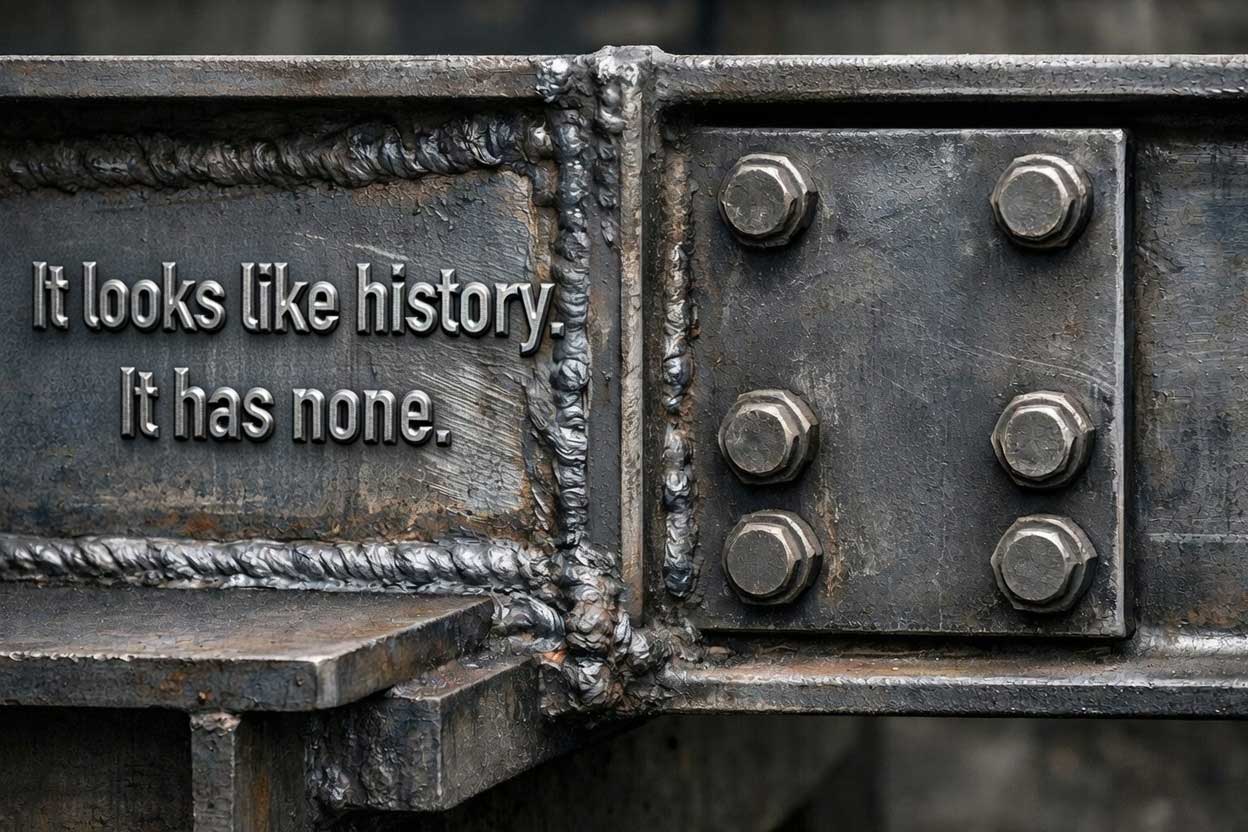
Tinkering with Time, Tech, and Culture #41

There’s a moment in the life of every mature system when someone says:
“We should rewrite this.”
The code is messy.
The patterns aren’t modern.
There are too many branches.
The loop is primitive.
The abstractions feel dated.
The shutdown path looks fragile.
Someone opens the file and winces.
It’s a reasonable instinct.
We are trained to admire elegance.
We are trained to collapse duplication.
We are trained to unify patterns and simplify state.
Clean code feels virtuous.
And sometimes it is.
But sometimes, the urge to make something beautiful erases the record of why it works.
It’s tempting to call that improvement.
But sometimes the pursuit of perfection deletes the very knowledge that made the system honest.
I’ve written before about how success compresses authorship into ownership and how stability hides the cost that made it possible.
This is another kind of erosion.
The Aesthetic Bias
Engineering culture quietly equates:
- symmetry with correctness
- brevity with intelligence
- modernity with improvement
It’s not entirely wrong.
But it is incomplete.
A system that survives long enough will accumulate asymmetry.
Not because its authors were careless,
but because reality is.
Networks are inconsistent.
Platforms behave differently under load.
Timing shifts under stress.
Failure does not announce itself in clean abstractions.
Over time, those asymmetries get encoded.
Not in documentation.
In branches.
In guards.
In retries that look excessive.
In conditionals that seem unnecessary.
Until the day they aren’t.
What looks ugly is often sediment.
And sediment is evidence.
Two Days of Reality
In the last two days of hardening a small C core, nothing glamorous happened.
No new architecture.
No feature flags.
No modernization campaign.
What happened instead was reality reasserting itself.
A crash surfaced because FD_ISSET was called on an invalid listener socket.
UDP listener behavior required enabling SO_REUSEADDR, because deployments are messy and ports linger.
Parser and logging paths were hardened. Inputs are adversarial, not polite.
Critical audit issues were resolved. They weren’t loud. Quiet assumptions are dangerous.
An always-true condition was discovered silently disabling UID filtering.
Shutdown paths were cleaned so sockets and hash tables don’t leak under stress.
Stats visibility was expanded so behavior can be observed instead of guessed.
None of these changes improved aesthetics.
All of them increased honesty.
They are not stylistic choices.
They are scars.
A rewrite can remove these scars.
Maintenance preserves them.
A Userspace Kernel
The core I maintain runs in userspace.
It still uses select().
It revolves around a large loop that would not win awards for elegance.
There are branches that look defensive.
Retries that look paranoid.
Timeouts that feel conservative.
Someone encountering it fresh might suggest replacing the loop entirely.
Adopt epoll.
Unify the state machine.
Collapse the conditionals.
Abstract the socket layer.
One day, that rewrite may be justified.
But only if the archeology is done first.
Because every awkward edge corresponds to something that once failed in the wild.
A NAT behaving unpredictably.
A socket closing under load.
A platform-specific descriptor quirk.
A race condition that only appeared once every few weeks.
The code carries those memories structurally.
Not in comments.
In shape.
The Compression Problem
Modernization compresses.
Refactoring compresses.
Abstraction compresses.
Compression increases clarity.
It removes context.
Flatten a branch without understanding why it was added, and you compress away history.
Unify divergent platform behavior without remembering why it diverged, and you delete memory.
Simplify a shutdown path because it “seems excessive,” and you assume symmetry where there may be none.
Cleaning code you didn’t write is often just deleting insurance you didn’t pay for.
Insurance exists because something happened.
You may not see the accident anymore.
That does not mean it never occurred.
The Rewrite Is Not the Villain
Rewrites are not inherently naive.
Some systems truly need to be rebuilt.
Some sediment is obsolete.
Some branches encode environments that no longer exist.
The problem is not rewriting.
The problem is rewriting without archeology.
Understanding why a branch exists is not optional.
It is the license to remove it.
If you cannot explain the failure that produced a guard, you have not earned the right to simplify it.
That doesn’t mean you leave everything untouched.
It means you investigate before you flatten.
The Abstraction Incident
Years ago, I allowed someone to abstract large portions of a C subsystem.
The intent was good:
reduce duplication, unify patterns, modernize structure.
The result looked cleaner.
Function calls were routed through generalized interfaces.
Behavior was layered behind reusable helpers.
Conditionals were collapsed into configuration paths.
On paper, it was more elegant.
Then something broke under load.
Debugging meant stepping through layers of indirection.
Tracing execution required navigating abstractions that hid actual socket behavior.
The system was technically organized. It was behaviorally opaque.
At the exact moment clarity mattered most, the path from cause to effect was obscured.
We eventually removed most of it.
The lesson wasn’t “don’t abstract.”
It was this:
Abstraction that hides constraint is not improvement.
When you cannot see the relationship between a failure and the guard that prevents it, you have traded elegance for fragility.
Reality > Elegance
There is nothing morally superior about messy code.
Ugly code can absolutely be incompetent.
But some ugliness is earned.
Some asymmetry corresponds directly to asymmetry in the environment.
Some defensive logic reflects adversarial conditions that have not vanished.
They have only been quiet.
When we prioritize elegance without constraint awareness, we risk mistaking:
aesthetic cleanliness
for
behavioral correctness.
They are not the same.
When Perfection Becomes Unethical
Perfection becomes unethical when it deletes lineage.
When modernization erases visible friction.
When abstraction removes the trace of failure.
When a rewrite presents a system as if it were always coherent.
That kind of perfection teaches the wrong lesson.
It suggests the problem was simpler than it was.
It suggests the solution emerged cleanly.
It suggests there was no cost.
Future builders optimize confidently.
The constraint they didn’t understand resurfaces under new abstraction.
The system appears improved.
Until reality returns.
Why This Matters Now
We are entering an era where code can be rewritten fluently and instantly.
Large language models can propose symmetrical refactors in seconds.
They preserve syntax.
They preserve structure.
They satisfy linters and formatting tools.
What they cannot preserve is memory unless you explicitly supply it.
They generate structure.
They do not generate memory.
An AI-driven refactor can produce code that looks like it has history.
It has none.
It can preserve surface coherence while silently deleting the sediment that kept the system honest.
That makes these tools powerful.
It also makes them capable of producing borrowed certainty at scale.
If rewriting becomes effortless, forgetting becomes effortless.
Constraint awareness becomes the scarce skill.
Maintenance as Translation
Maintenance is not stagnation.
It is translation across time.
It means holding two truths at once:
The environment has changed.
The past failures still matter.
It requires knowing which scars still carry load,
and which can heal.
The systems that endure are not always the ones that look refined.
They are the ones that remember what hurt.
If we remove every visible trace of friction, we don’t just simplify the code.
We simplify the story of how it survived.
And when the story disappears, so does the protection it once encoded.
Beauty is not always the moral choice.
Leaving the welds visible is not laziness.
It is stewardship.
It is memory.
It is maintenance.